Liquefaction Site Assessment and Repair Christchurch
Properties in known liquefaction-affected zones need more than a standard driveway or foundation repair. Ground that has shifted or lost stability during past seismic activity doesn't behave like typical soil, and treating it with standard construction methods often leads to the same problems resurfacing within just a few years.
That's why we assess ground stability first, then build accordingly. Before any repair or rebuild begins, we evaluate your property's specific soil conditions, seismic history, and risk level, so the work that follows is engineered for what's actually happening beneath the surface, not just what's visible on top.
This approach matters most in Christchurch, where certain suburbs carry documented liquefaction risk following past seismic events. Skipping proper assessment on these properties is one of the most common reasons repairs fail early. We start with the ground itself, because a driveway or foundation is only as stable as what it's built on.
What Is Liquefaction, and Why Does It Matter Here?
Liquefaction occurs when saturated, loose soil temporarily loses its strength during seismic activity, causing the ground to behave more like a liquid than a solid. In Christchurch, certain suburbs and zones are known to have soil conditions more susceptible to this than others, a legacy of the region's seismic history and underlying ground composition.
For homeowners in these areas, this isn't just a historical concern. Ground that has experienced liquefaction, or is at risk of it, can shift, settle, or lose load-bearing capacity in ways that standard construction methods don't account for. Building or repairing a driveway or foundation without properly assessing this risk first often means dealing with the same structural problems again within a few years.
Why Standard Repairs Aren't Enough in Liquefaction Zones
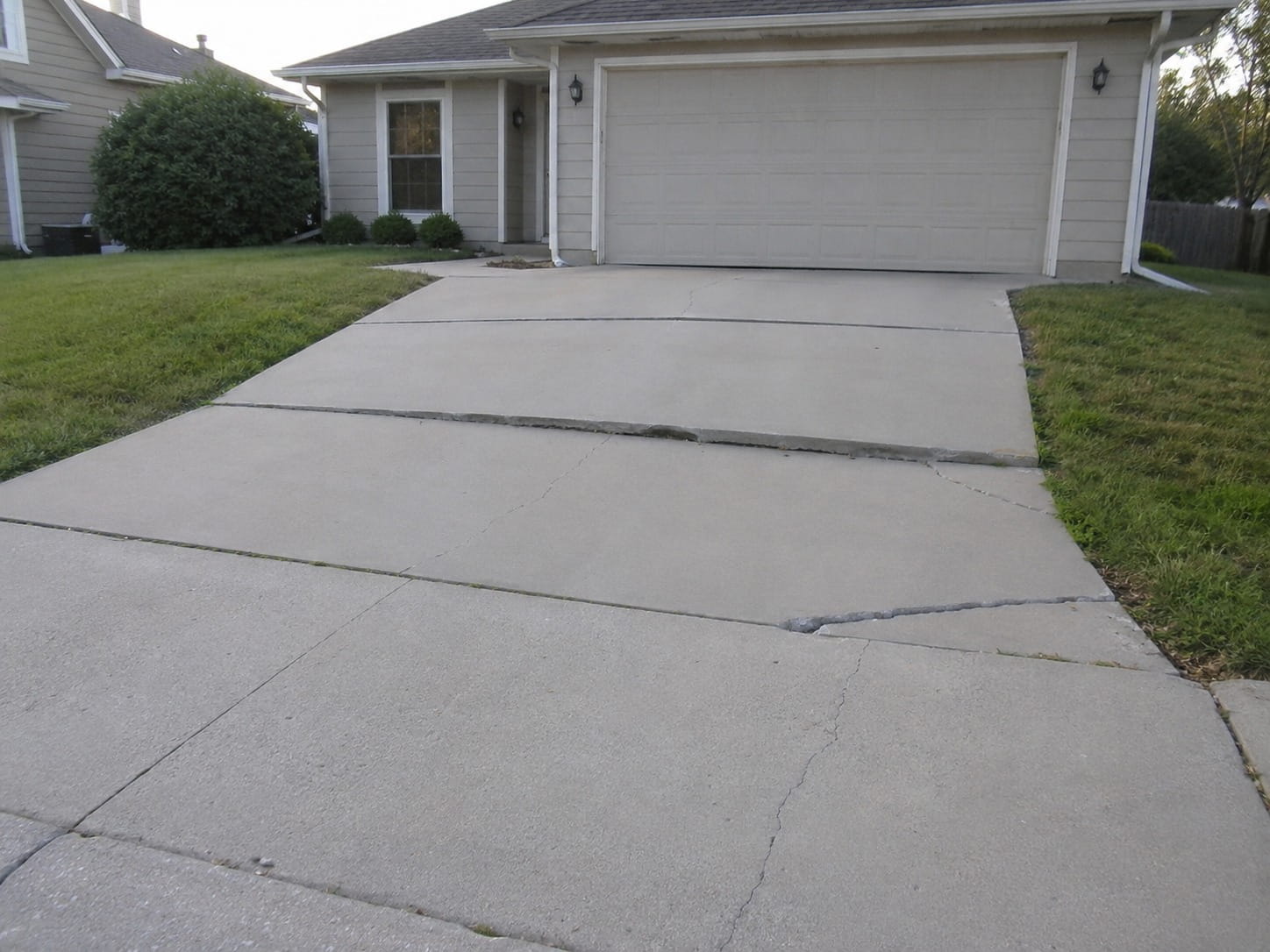
A driveway or foundation built on liquefaction-affected ground needs different treatment than a standard residential project. Without a proper ground evaluation, even a well-built surface can fail early if the soil beneath it isn't stable enough to support it long-term.
That's why liquefaction site assessment isn't an optional add-on for properties in these zones, it's the foundation of the entire project. Skipping this step is one of the most common reasons repairs and rebuilds fail prematurely in known liquefaction-affected areas of Canterbury.
Signs Your Property May Be Liquefaction-Affected
- Your property is located in a known liquefaction-risk zone
- Previous ground shift or settling after past seismic events
- Repeated driveway or foundation cracking despite past repairs
- Uneven or sloping ground that has changed over time
- Sandy or silty soil visible during excavation or digging
- Nearby properties have documented liquefaction damage
- Standing water or unusual drainage patterns after rain
If any of these apply to your property, a proper assessment before any construction or repair work is strongly recommended.
Our Liquefaction Assessment & Repair Process
Ground Risk Evaluation
We assess your property's location, soil composition, and history to determine liquefaction risk and severity.
Site-Specific Soil Testing
Where needed, we evaluate soil stability directly on-site to understand exactly what the ground can support.
Engineered Repair Planning
Based on findings, we design a repair or rebuild plan suited specifically to your site's ground conditions, not a generic approach.
Foundation & Sub-Base Rebuild
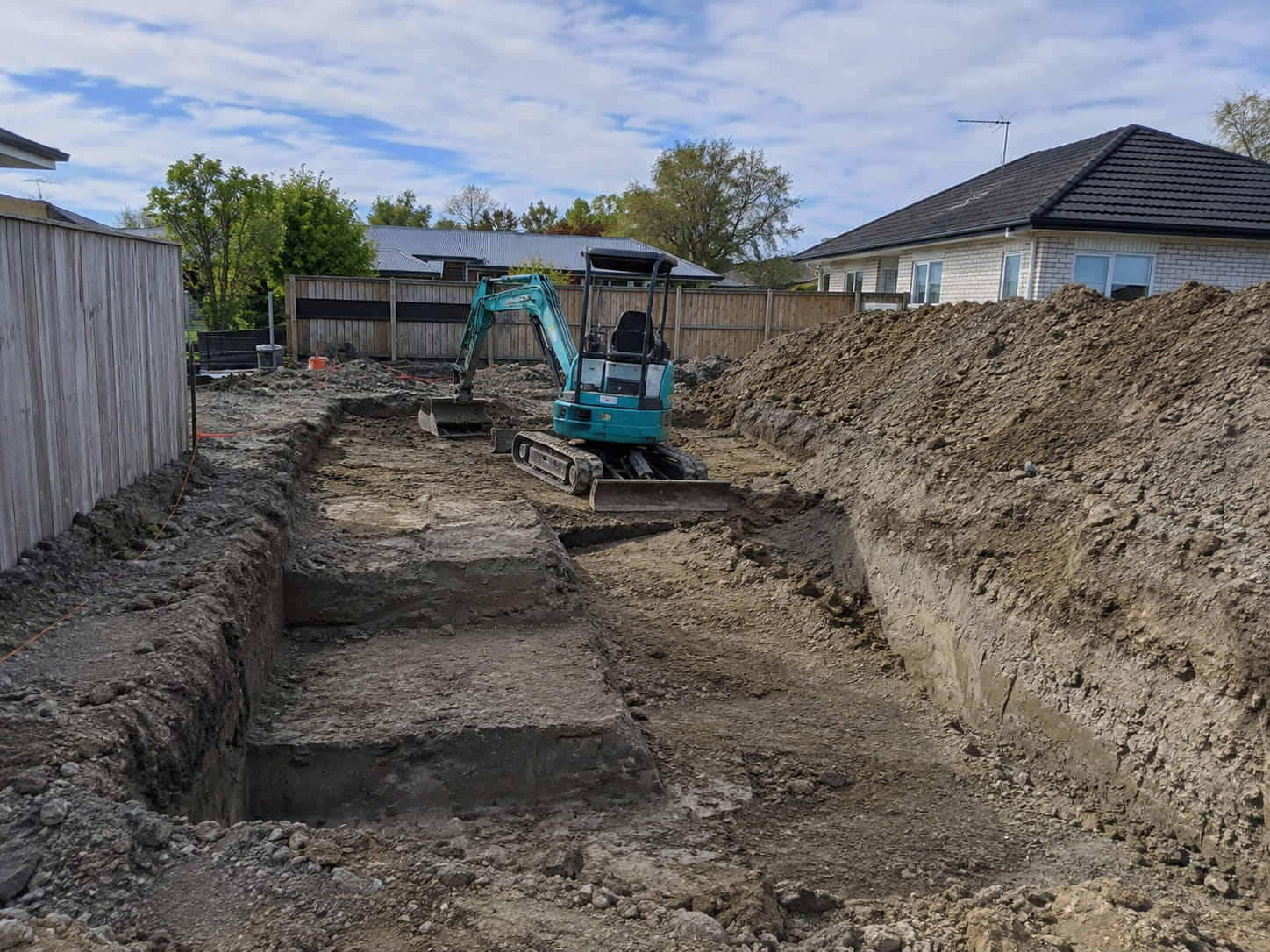
We excavate and rebuild using properly compacted hardfill, engineered to provide stable support even on liquefaction-prone ground.
Drainage Correction
We address drainage issues that can worsen soil instability over time, reducing future risk.
Final Inspection & Warranty
Every project is backed by our 10-year workmanship warranty, giving you confidence the work is built to last.
Where This Service Applies
Residential Driveways
Rebuilding driveways on liquefaction-affected properties with proper ground assessment and engineered sub-base support.
Home Foundations
Evaluating and reinforcing foundation ground conditions before repair or new construction begins.
Subdivision Developments
Site-wide liquefaction assessment for developers planning multi-lot subdivisions in known risk zones.
EQC & Insurance-Related Repairs
Assessment and documentation to support insurance or EQC claims tied to liquefaction-related property damage.
Why Choose Us
Local Seismic Expertise
15+ years working with Christchurch's specific soil conditions, seismic history, and known liquefaction zones.
Assessment Before Action
We evaluate ground conditions first, rather than applying a standard repair approach to a non-standard site.
Engineered, Not Guessed
Every repair plan is based on actual site findings, not assumptions about what "usually" works.
Licensed, Insured, and Warrantied
Full licensing and insurance on every project, backed by a 10-year workmanship guarantee.
Christchurch Liquefaction Site Assessment and Repair Questions
How do I know if my property is in a liquefaction-risk zone?
Many Christchurch liquefaction zones were documented following past seismic events. We can help assess your specific property's risk as part of our site evaluation.
Does liquefaction risk mean I can't build or repair my driveway?
No. It means the project needs to be planned differently, with proper ground assessment and engineered sub-base work, rather than standard construction methods.
Will insurance or EQC cover liquefaction-related repairs?
It depends on your specific policy and circumstances. We provide documentation and assessments that can support EQC or insurance claims related to liquefaction damage.
How long does a liquefaction assessment take?
Initial site assessments are typically completed within a few days, though more detailed soil testing may extend the timeline depending on site complexity.
Can liquefaction-affected ground ever be made fully stable?
With proper excavation, compaction, and engineered sub-base construction, we can significantly improve ground stability and reduce the risk of future settling or damage.