Exposed Aggregate Pavers Christchurch
Plain grey concrete does its job, but it wears its history on the surface — tyre marks, oil spots, and a polished patch where everyone walks. On a sloping section it can also turn genuinely slippery after a frost.
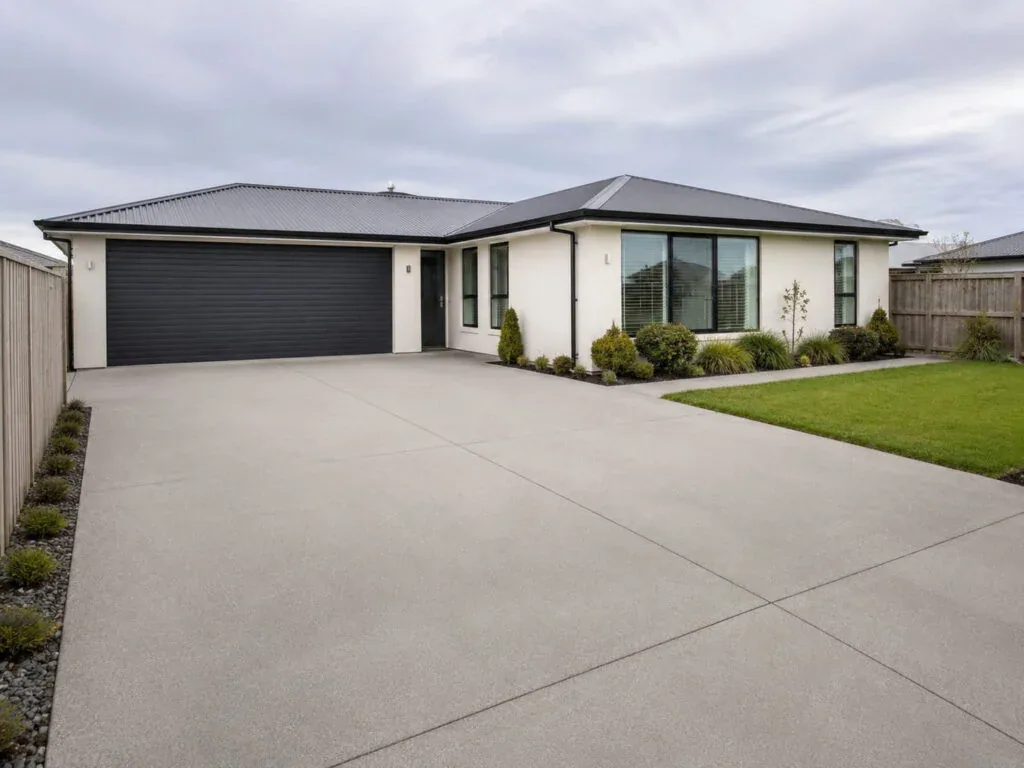
Washing back the cement to reveal the stone underneath fixes both problems at once, and it is why exposed aggregate paving in Christchurch has become such a common choice on new builds and renovations. The texture gives you grip underfoot, the mixed chip disguises marks that would stand out on a smooth slab, and you choose the stone and tone to suit the house. We lay it as poured aggregate and as precast paving units, across driveways, paths, patios and pool surrounds — and because the finish is the slab itself, there is nothing to peel or recoat later.
Choosing Your Stone, Colour and Texture
This is the part most people enjoy. The chip you choose changes the whole character of the surface — a pale Canterbury river stone keeps things light and reflective, while darker basalt gives a paved area more weight and hides marks even better. Shell and quartz blends catch the light in a way that suits modern cladding.
How far we wash back matters just as much as the stone itself. A light exposure leaves a subtle, fine texture that is comfortable underfoot around a pool. A deeper exposure brings the chip properly forward for maximum grip on a steep drive. We bring samples to site so you can see them in daylight against your house rather than guessing from a brochure.
Driveways, Paths, Patios and Pool Surrounds
Driveways are the most common request, and the reasoning is practical: the surface has to take a vehicle every day, cope with turning tyres, and still look presentable from the street. A washed finish handles all three better than a smooth trowelled slab, which shows every scuff.
Around pools and outdoor living areas the priority shifts to comfort and safety, so we tend to recommend a finer exposure that stays cool and grippy without being harsh on bare feet. For pathways and steps we can tighten the mix and add a subtle fall so water clears quickly. If you are also planning patios and pathways or a full concrete driveway, it usually pays to pour everything in one visit.
Working With Our Canterbury Paving Team
Getting an even, consistent exposure is a matter of timing, and timing is where inexperienced crews come unstuck. Wash too early and the stone drops out; leave it too late and the cement will not shift at all. Our specialists read the weather, the mix and the slab all afternoon to hit that window, which is why our finishes look uniform from one end of a driveway to the other.
Underneath the finish, the fundamentals still decide how long it lasts. We compact the base properly, set reinforcing and control joints where the slab will want to move, and build in falls that keep water off your foundations — the same standards we apply to every pour, decorative or not.
Looking After an Exposed Aggregate Surface
Maintenance is genuinely minimal. A wash down with a hose and stiff broom two or three times a year keeps grit out of the texture, and there are no joints for weeds to colonise the way they do between clay pavers.
We do recommend a penetrating sealer, particularly on lighter stone and anywhere a car parks. It slows staining from oil and leaf tannins, deepens the colour slightly, and makes the surface easier to clean. Resealing every few years is a straightforward job, and we are happy to come back and do it for you.
Christchurch Exposed Aggregate Pavers Questions
How much does exposed aggregate cost in Christchurch?
It usually sits above a plain broom-finished slab because of the stone selection and the extra labour in washing back the surface, but well below natural stone or clay paving once you account for laying costs. Price depends on area, site access and the chip you choose — ring 03 660 1155 and we will quote it properly after a site visit.
Is exposed aggregate slippery when wet?
The opposite, generally. Exposing the chip creates a textured surface with far more grip than smooth trowelled concrete, which is why it is a popular choice for sloped driveways and pool surrounds. A very fine exposure will be less aggressive underfoot if comfort matters more than maximum traction.
Can you match new paving to an existing driveway?
Often, yes — we can get close on stone type and exposure depth. Be aware that concrete cures and weathers over time, so a fresh pour will look brighter than a slab that has been down for years and will settle in over the following months.
How long before we can drive on it?
You can usually walk on it after 24 to 48 hours, but keep vehicles off for around seven days so the slab reaches enough strength. We will give you exact timings on the day, as they shift with temperature.