Exposed Aggregate Concrete in Christchurch: What You’re Paying For
Exposed aggregate concrete in Christchurch runs $150–$230 per square metre, against $100–$180/m² for a plain broom finish. It is the same slab underneath — same thickness, same mesh, same basecourse. What you are paying for is the stone, the extra labour, and a finishing process that has to be timed correctly on the day.
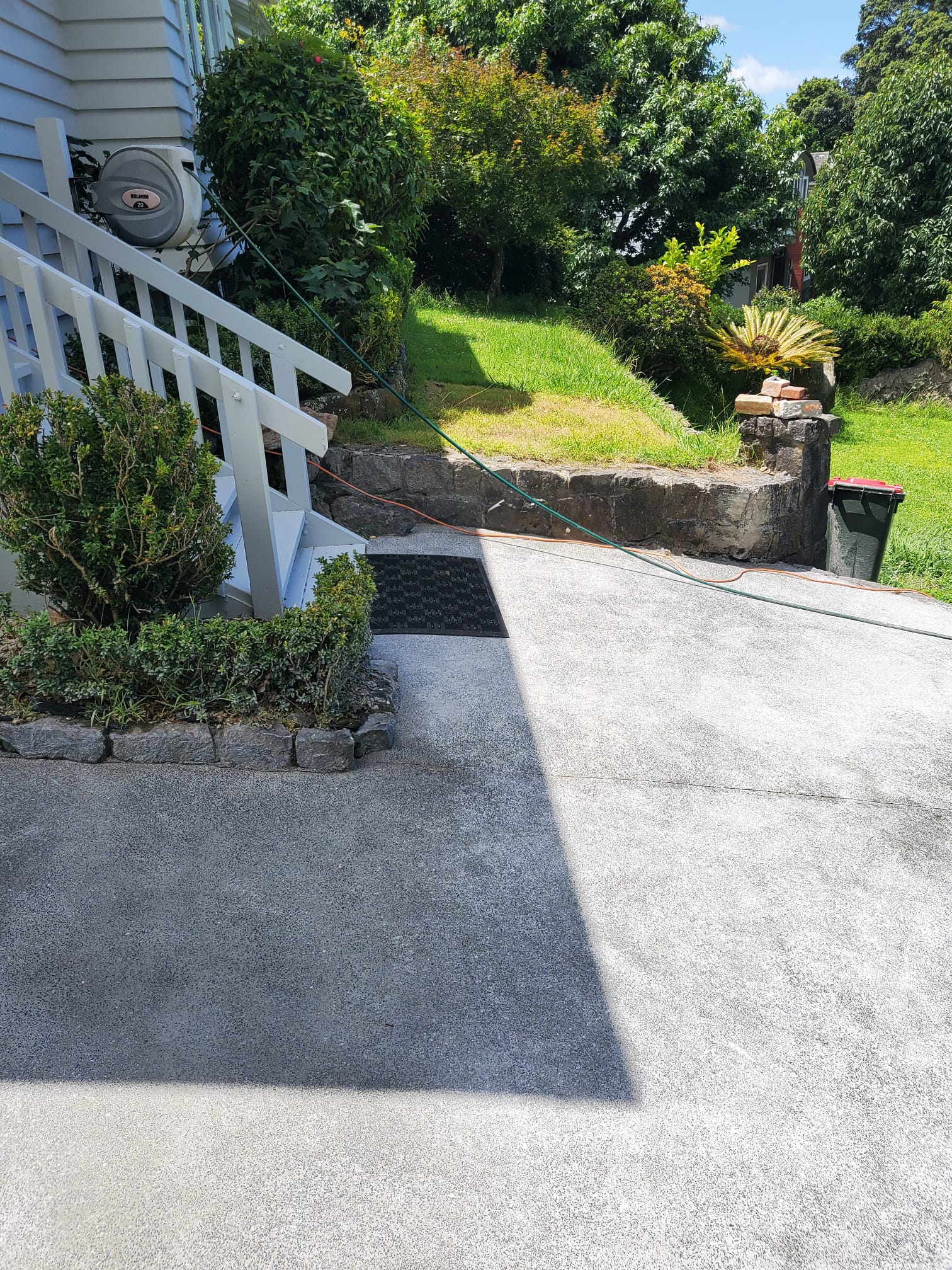
The result is a surface with visible stone through it, excellent grip underfoot, and no colour to fade the way a coloured slab can — the colour is the stone. It also hides marks and staining far better than plain grey, which matters on a front driveway.
The risk is that exposed aggregate is genuinely harder to get right than a broom finish, and the mistakes are permanent. Here is what the process involves, what drives the cost, and what to look for.
How the Finish Is Actually Made
Exposed aggregate is not stone laid onto concrete. It is concrete with a decorative aggregate in the mix, where the top few millimetres of cement paste is removed while the slab is still young to reveal the stone sitting just below the surface.
The usual method is a surface retarder sprayed onto the fresh slab straight after finishing. It slows the set of the very top layer while the concrete beneath cures normally. Some hours later — and the window depends on temperature, wind, humidity and the mix — the crew washes and brushes that softened paste away, exposing the aggregate underneath. An alternative approach is a seeded finish, where selected stone is broadcast onto the surface and worked in before the wash-off.
Everything hinges on when the wash-off happens. Go too early and you strip out cement paste that was holding the stone, so aggregate pops out over the following years and the surface goes patchy. Go too late and the paste has hardened past the point of removal, leaving a dull, half-exposed finish with no consistency. There is one window, it moves with the weather, and it does not come back.
This is why exposed aggregate is where the gap between an experienced crew and a cheap one shows most clearly. A broom finish that is slightly off looks slightly off. An exposed aggregate wash-off that is mistimed looks wrong for the life of the driveway, and the only fix is replacement or an overlay.
The Christchurch Complication: the Nor’wester
Timing a wash-off requires predicting how fast the surface will cure. In Canterbury that prediction gets harder than in most of the country.
A nor’west wind — the hot, dry föhn wind that comes over the Southern Alps — can raise the temperature roughly ten degrees in minutes and behaves like a giant hairdryer across a fresh slab. That accelerates the surface set dramatically and pulls the wash-off window forward, sometimes by hours. It also drives surface evaporation hard enough to cause plastic shrinkage cracking in the slab itself, independently of the finish.
The practical consequence is that a crew working an exposed aggregate pour in Christchurch has to watch the forecast and be ready to move. That means windbreaks, evaporative retarders, an earlier start to beat the afternoon wind, or postponing to another day. On a plain broom finish a nor’wester is a problem to manage. On exposed aggregate it can cost you the finish.
Winter brings the reverse: overnight lows of 0°C to −2°C slow the set and push the wash-off window later, with frost risk on a surface that has not yet cured. Spring and autumn are the comfortable seasons for this finish in Christchurch. It can absolutely be done in summer or winter — it just needs a crew that plans around the conditions rather than turning up with a fixed schedule.
Exposed Aggregate Against the Alternatives
| Finish | Cost/m² | Grip | Hides marks | Notes |
|---|---|---|---|---|
| Plain broom finish | $100–$180 | Good | Poor | The default. Shows oil, tyre marks and patch repairs clearly. |
| Exposed aggregate | $150–$230 | Excellent | Very good | Colour comes from stone, so nothing fades. Harder to get right. |
| Coloured concrete | $150–$220 | Good | Moderate | Wide colour range, but pigment can fade with UV and needs resealing. |
| Stamped concrete | $150–$220 | Varies with pattern | Moderate | Mimics pavers or stone. Pattern can be slippery when wet if sealed glossy. |
| Honed or polished | Above exposed aggregate | Lower when wet | Good | Ground back after curing for a smooth, stone-flecked surface. |
| Exposed aggregate pavers | $120–$200 | Excellent | Very good | Same look in modular form, and sections can be lifted and relaid. |
All ranges are Christchurch planning estimates for 2026 and assume the same base preparation. Site access and excavation move them.
What Drives the Price Within the Range
Two exposed aggregate quotes can differ by $60/m² on the same driveway. These are the reasons.
The aggregate itself
Stone choice is the biggest single variable. Locally sourced Canterbury river shingle is the economical option and looks appropriate here. Imported or specialty aggregates — dark basalts, quartz, colour-matched blends — cost considerably more per cubic metre, and that flows straight into the rate.
How much stone shows
A light exposure removes just the surface paste. A deeper exposure removes more, showing more stone and a more textured surface, and takes longer to wash and brush. Deeper exposure costs more labour and is less forgiving of mistiming.
Aggregate size
Smaller stone gives a finer, more uniform surface and generally needs more careful work. Larger stone reads bolder and is quicker to expose evenly. Neither is better; they cost differently.
Area and shape
The wash-off has to happen across the whole pour inside one window. A large or awkwardly shaped area needs more people on site at once to finish it consistently, and that is a labour cost, not a materials one.
Sealing
Most exposed aggregate is sealed, which deepens the stone colour, makes the surface easier to clean, and helps lock aggregate in place. Usually quoted separately. Budget for resealing periodically — see concrete sealing in Christchurch.
Everything under the slab
Excavation, spoil removal, basecourse depth, slab thickness, mesh and drainage cost exactly the same as they would for a plain driveway. If an exposed aggregate quote is cheap, check these have not been trimmed to fund the finish.
Where Exposed Aggregate Works Best — and Where It Doesn’t
It earns its premium on a front driveway, where the surface is visible from the street and part of how the house presents. It is also genuinely practical rather than purely decorative: the texture gives real grip on a sloped drive in the wet, and the mixed stone colour disguises oil spots, tyre marks and general wear that would stand out badly on plain grey. Around a pool or on steps, the slip resistance is a safety argument in its own right.
Where it makes less sense: a garage or shed floor, because the texture traps dirt and is unpleasant to sweep or work on. A long rural drive in Selwyn or Waimakariri, where the cost across a couple of hundred metres is hard to justify and nobody sees most of it. And anywhere you plan to park a boat or trailer with a jockey wheel, since concentrated point loads on a textured surface can dislodge aggregate over time.
Barefoot areas are worth thinking about too. Exposed aggregate is grippy, which is the point, but a coarse exposure with sharp stone is not comfortable underfoot. If it is running through to a patio or pool surround, ask for a finer aggregate and a lighter exposure on that section.
If you like the look but the site or the budget argues against a poured finish, exposed aggregate pavers give a similar appearance in modular form with the ability to lift and relay sections. Our aggregate driveway cost guide goes further into the numbers, and decorative concrete covers the other finishes.
Looking After It
Low maintenance, but not no maintenance. The texture that gives grip also holds onto more than a smooth slab does.
Wash annually
Christchurch driveways collect moss and lichen, especially on shaded southern aspects, and the texture gives it more to hold onto. A wash at $3–$6/m² keeps it looking right. Moderate pressure only — aggressive blasting can dislodge stone and strip the sealer.
Reseal on schedule
A topical acrylic sealer, which is the usual choice on exposed aggregate because it deepens the stone colour, needs redoing every 1–3 years. A penetrating sealer lasts 5–10 years but does not enhance colour the same way. Pick based on whether you want the wet look.
Deal with oil promptly
The finish hides oil well, which is a mild trap — it means stains sit longer before you notice them and soak deeper. A degreaser and a brush handles fresh spots. Older stains need a dedicated concrete degreaser and may need professional treatment at $10–$30 per stain.
Expect a little loose stone early
A small amount of loose aggregate in the first weeks is normal and settles down. Ongoing stone loss, or bare patches appearing, means the wash-off was done too early and the paste that held the stone was removed. Raise it with your contractor promptly.
Keep joints sealed
Control joints should stay sealed so water does not get under the slab. In a Christchurch winter, water sitting in an open joint and freezing is a genuine driver of edge damage and spalling.
Go easy on winter salt
De-icing salts accelerate surface damage and spalling on any concrete. Grit or sand is the better option on a frosty Christchurch morning, and it does not attack the surface.
Frequently Asked Questions
How much does an exposed aggregate driveway cost in Christchurch?
Around $150–$230 per square metre installed, compared with $100–$180 for a plain broom finish. For a typical 50–100 m² driveway that puts you roughly in the $7,500–$23,000 range. What moves the price within that band is the aggregate you choose, how deeply it is exposed, the area and shape, whether sealing is included, and all the usual site factors — excavation, spoil removal, basecourse depth, access and drainage.
Is exposed aggregate worth the extra cost over plain concrete?
On a front driveway, usually yes. You get much better grip, particularly on a slope in the wet, and the mixed stone colour hides oil marks, tyre scuffs and general wear that show up clearly on plain grey. Because the colour comes from the stone itself, there is no pigment to fade. On a garage floor, a long rural drive, or anywhere out of sight, the premium is harder to justify and a broom finish does the same structural job.
Why do some exposed aggregate driveways lose their stone?
Almost always because the wash-off was done too early. The finish is created by removing the top layer of cement paste at exactly the right moment to reveal the stone beneath. Wash too soon and you also remove paste that was holding the aggregate in place, so stone works loose over the following years and the surface goes patchy. A small amount of loose stone in the first few weeks is normal; ongoing loss or bare patches is a finishing fault, and it is not something a sealer will fix.
Does exposed aggregate need sealing?
It does not strictly have to be sealed, but most Christchurch exposed aggregate driveways are, and there are good reasons. A sealer deepens the stone colour, makes the textured surface much easier to clean, helps lock the aggregate in place, and slows moss and lichen. Topical acrylic sealers give the wet look and need redoing every one to three years; penetrating sealers are invisible and last five to ten years but do not enhance colour. Sealing is usually quoted separately from the pour.
Is exposed aggregate slippery?
The opposite — it is one of the grippiest concrete finishes available, which is why it is common on sloped driveways, steps and pool surrounds. The texture sheds water and gives good traction in the wet. The one caveat is the sealer: a high-gloss topical sealer can reduce slip resistance, so if the area gets wet regularly, ask for a sealer with an anti-slip additive or a satin rather than gloss finish.
Can exposed aggregate be poured in summer in Christchurch?
Yes, but it needs planning around the nor’wester. A hot dry nor’west wind can lift the temperature about ten degrees in minutes and dramatically accelerates the surface set, pulling the wash-off window forward and risking plastic shrinkage cracking in the slab. Experienced crews respond with windbreaks, evaporative retarders, an early start to beat the afternoon wind, or by moving the pour to another day. Spring and autumn are the easiest seasons for this finish here.
Can you resurface an existing driveway with exposed aggregate?
Not with a true exposed aggregate finish, because that requires stone within the depth of a fresh pour. What is possible on a structurally sound slab is a decorative overlay 10–20 mm thick that mimics the look, or a stone-seeded topping. Both depend on the existing slab being sound with no active movement, since any live cracking telegraphs through an overlay. If the slab is failing, an overlay is not the answer regardless of the finish you want.
Get an Exposed Aggregate Quote
Exposed aggregate is a finish where experience genuinely shows, because the wash-off window happens once. Christchurch Concrete Driveways pours it across Christchurch and Canterbury and plans the day around the weather rather than the diary. Call 03 660 1155 to talk through aggregate options and get a free estimate.