Cheap Driveway Options in Christchurch
A new driveway is one of those home improvements that's easy to put off, mostly because it can feel like a big expense. But the good news is that “affordable” and “quality” aren't mutually exclusive when it comes to driveways in Christchurch.
There are several budget-friendly options that hold up well against Canterbury's weather and soil conditions, without requiring you to spend a fortune. In this guide, we'll walk through the most cost-effective driveway materials available locally, what makes each one a smart choice, and — just as importantly — why the cheapest contractor on the quote list isn't always the best decision for your wallet in the long run.
Why Driveway Costs Vary So Much in Christchurch
Before jumping into specific options, it helps to understand why driveway pricing swings so widely from one quote to the next. Several factors influence cost: the material itself, the size of the area being covered, how accessible your site is for machinery and trucks, the amount of ground preparation and excavation required, and whether drainage work is needed.
Canterbury's variable soil types, including clay-heavy sections and areas with a higher water table, can also add to preparation costs, since a driveway built on poorly prepared ground is far more likely to crack, sink, or fail early. This is exactly why two quotes for what looks like the “same” driveway can come in at very different price points — one contractor may be pricing in proper preparation and compaction, while another is cutting corners to hit a lower number.
Affordable Driveway Options to Consider
If budget is your primary concern, here are some of the most cost-effective driveway options available to Christchurch homeowners, ranked roughly from most to least affordable.
1. Gravel Driveways
Gravel is typically the cheapest driveway option available, and it remains a popular choice for rural properties, long driveways, and homeowners who want a natural, low-maintenance look. A well-installed gravel driveway involves a compacted base layer, proper edging to keep material contained, and adequate drainage to prevent washout during heavy rain. The tradeoff is ongoing maintenance — gravel needs periodic top-ups and regrading, particularly after Canterbury's wetter months, but the low upfront cost makes it an attractive option for budget-conscious projects or properties where a hard surface isn't essential.
2. Chip Seal (Sealed Chip)
Chip seal, sometimes called tar seal or sealed aggregate, sits in the next price bracket up from gravel and offers a noticeable step up in durability and appearance. It involves applying a layer of bitumen followed by a layer of compacted chip, creating a surface that's firmer and lower-maintenance than plain gravel while still costing considerably less than concrete or asphalt. Chip seal driveways handle Christchurch's freeze-thaw cycles reasonably well and can last many years with occasional resealing, making them a solid middle-ground choice for homeowners wanting more than gravel without stretching to a full concrete pour.
3. Plain Concrete (Broom Finish)
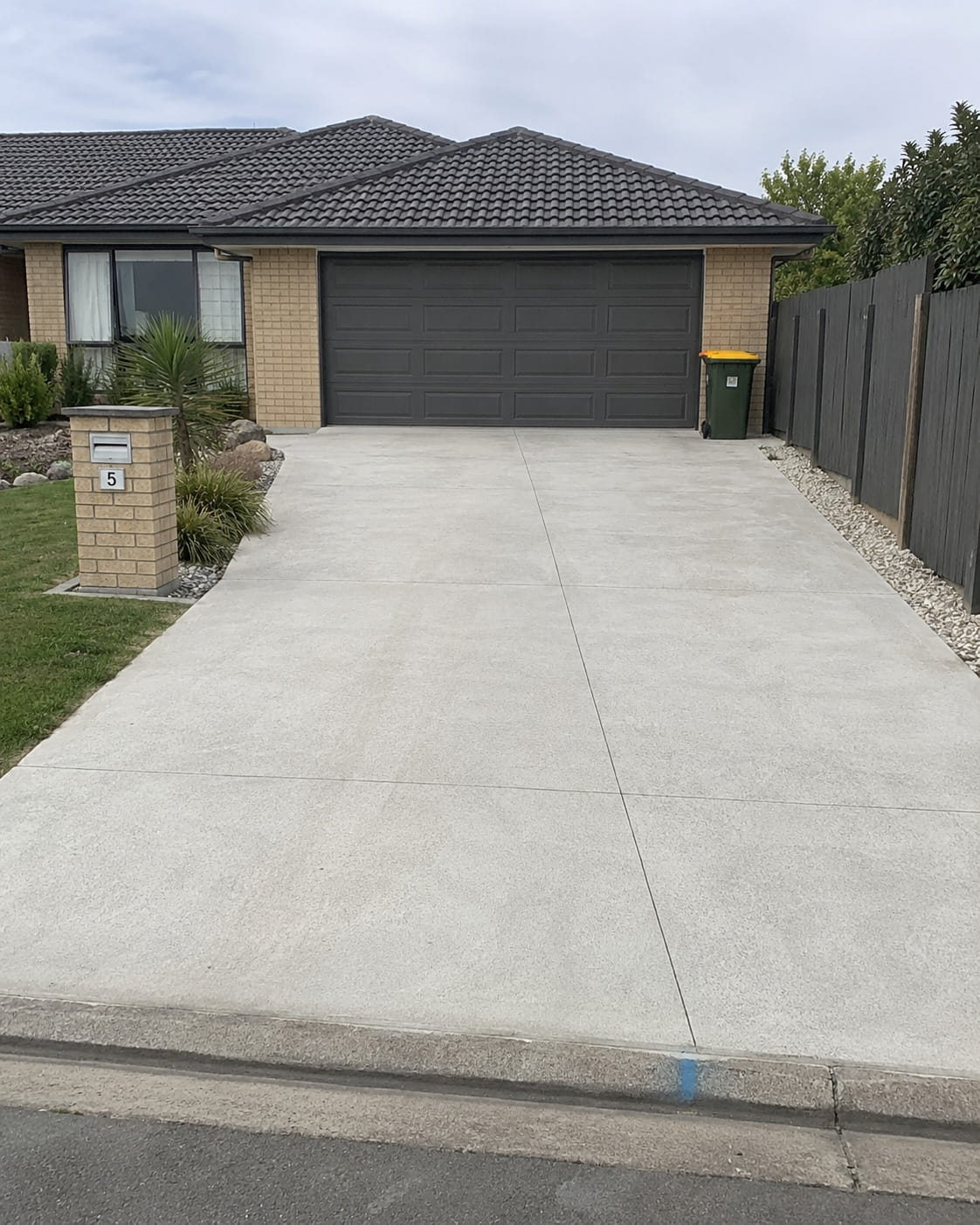
When people think “cheap concrete driveway,” they're usually picturing a standard broom-finished slab rather than a decorative option. A plain concrete driveway with a simple broom finish is significantly more affordable than exposed aggregate, coloured, or stamped concrete, while still offering the durability, low maintenance, and long lifespan that concrete is known for. This is often the sweet spot for homeowners who want a genuinely long-lasting hard surface without paying for decorative finishing they don't necessarily need. Skipping fancy finishes doesn't mean skipping quality — the strength of the slab comes from proper thickness, reinforcement, and preparation, not the surface texture.
4. Asphalt
Asphalt driveways are generally cheaper to install than concrete, particularly for larger areas, and they go down relatively quickly compared to concrete's curing time. Asphalt has some flexibility that allows it to handle minor ground movement better than concrete in certain conditions, which can be an advantage on sites with less stable soil. The tradeoff is that asphalt typically requires more maintenance over its lifespan, including periodic sealing, and generally doesn't last quite as long as a well-built concrete driveway. For homeowners prioritising a lower upfront cost and quicker installation, though, asphalt remains a genuinely competitive option.
5. Recycled or Crushed Concrete
An increasingly popular budget option, recycled or crushed concrete (often called RCA — recycled concrete aggregate) offers a compacted, semi-permeable surface at a lower cost than new material, while also being a more sustainable choice. It performs similarly to a well-compacted gravel driveway but with slightly better stability, since the crushed material locks together more firmly during compaction. It's a good option for homeowners who like the idea of gravel's affordability but want a bit more firmness underfoot and under tyres.
6. Budget-Grade Pavers
While pavers can get expensive quickly with premium materials and intricate laying patterns, there are more affordable paver options available, particularly with simpler laying patterns, standard-sized concrete pavers, and reduced use of cutting or borders. Choosing a straightforward running-bond or stack-bond pattern with a single paver size keeps both material and labour costs down compared to complex herringbone or mixed-material designs, while still giving you the look and individual-unit repairability that pavers offer over a poured surface.
Why the Cheapest Contractor Isn't Always the Best Value
Here's the part that's easy to overlook when you're focused on getting the lowest possible price: the material you choose is only half the equation. Who installs it matters just as much, if not more. When it comes to contractors, hiring the cheapest one doesn't always equate to quality — and a driveway is exactly the kind of project where cutting corners on workmanship can cost you far more down the line than you saved upfront.
A driveway that looks fine on the day it's finished can start showing problems within a year or two if the groundwork wasn't done properly. Inadequate compaction, insufficient excavation depth, poor drainage planning, or skipped reinforcement are the kinds of shortcuts that don't show up in a quote line item but absolutely show up in cracking, sinking, or pooling water once the driveway has been in use for a while. Canterbury's ground conditions make this especially important — a driveway built on unstable or poorly prepared clay soil without the right preparation is far more likely to fail early, regardless of which material was chosen.
The problem with chasing the cheapest quote is that a genuinely low price is sometimes a sign that something is being left out, whether that's proper base preparation, adequate material thickness, correct drainage falls, or the time needed to do the job properly rather than rushing to the next site. A contractor who quotes noticeably lower than everyone else isn't necessarily dishonest, but it's worth asking exactly what's included in that price and comparing it line by line against other quotes, rather than assuming it's simply a better deal.
How to Balance Cost and Quality
The good news is that choosing an affordable driveway option doesn't mean you have to compromise on quality — it just means being deliberate about where you save and where you invest. Here's how to strike that balance:
Choose an affordable material, not an affordable contractor
Gravel, chip seal, plain concrete, and asphalt are all legitimate ways to reduce cost without cutting corners on workmanship. The savings should come from the material and finish you select, not from hiring whoever quotes the least to install it.
Ask what's included in the price
A proper quote should cover site preparation, excavation, base compaction, materials, and finishing. If one quote is significantly cheaper than others, find out specifically what’s different — it’s often preparation or thickness that gets reduced first.
Check experience with Canterbury conditions
A contractor who understands local soil types and drainage requirements will build a driveway that holds up, regardless of which material you choose. This local knowledge is worth paying for, even if it means the quote isn’t the absolute lowest.
Think in terms of cost per year, not just upfront cost
A driveway that costs a bit more but lasts twice as long, or doesn't need major repairs after three years, is almost always better value than one that was slightly cheaper to install but fails early.
Get references or examples of past work
A contractor confident in their workmanship will happily point you to previous driveways they've installed. If a contractor can't or won't do this, treat it as a signal worth paying attention to.
Frequently Asked Questions
What is the cheapest driveway option in Christchurch?
Gravel is generally the most affordable driveway material available, followed by chip seal and plain broom-finished concrete, depending on the size and preparation required for your site.
Is a cheap driveway worth it if it doesn't last as long?
Not necessarily. A driveway that needs repair or replacement within a few years often ends up costing more overall than one built properly the first time, even if the initial installation cost more.
How can I tell if a contractor's quote is too low?
Compare quotes line by line for what is included — site preparation, excavation depth, material thickness, and drainage work. A significantly lower price often means one or more of these has been reduced or left out.
Can I mix affordable materials to save money?
Yes, options like partial driveways with wheel strips, or combining a hard surface near the road with gravel further along, can reduce costs while still giving you a functional, durable driveway.
Get an Honest Driveway Quote
If you're weighing up driveway options and want a clear, itemised quote that explains exactly what you're paying for, Christchurch Concrete Driveways is here to help. Contact us on 03 660 1155 for an honest assessment of what will work best for your property, your budget, and Christchurch's ground conditions.